When conventional tyres struggle with deep snow, muddy fields or soft ground, a track conversion can make a noticeable difference. UTV snow tracks help distribute the vehicle’s weight across a larger surface area, improving flotation and reducing the chances of getting stuck. For farmers, property owners and outdoor enthusiasts, this upgrade can make seasonal work easier and provide access to otherwise difficult terrain.
Understanding the Performance Trade-Off
Before investing in a track system, it is worth understanding how it changes vehicle performance. Better traction comes with certain compromises, particularly reduced speed and increased fuel consumption. Kimpex reports average speed losses of approximately 30% for the HD4 and 35% for the WSS4. Camso estimates that its 4S1 maintains around two-thirds of normal tyre speed. Actual results depend on terrain and operating conditions.
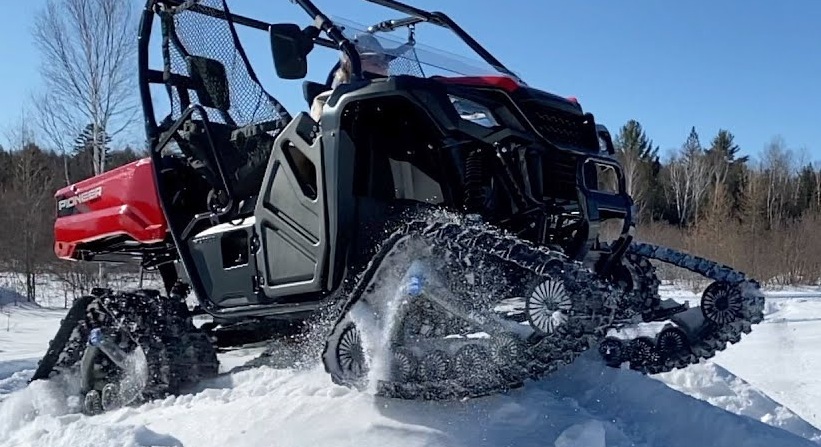
Additional rotating weight and resistance also increase fuel consumption, potentially reducing the distance covered between refuelling stops. Extended driving on pavement and gravel should be avoided because these surfaces can accelerate rubber wear. Occasional road crossings are generally manageable, but tracks perform best in off-road environments.
Comparing Different Track Systems
Anyone researching UTV tracks for sale will find several options designed for different vehicle sizes and workloads. Choosing between them requires looking beyond the purchase price and considering footprint, construction, weight capacity and compatibility.
The Camso UTV tracks range includes the 4S1, designed for full-size side-by-sides in the approximate 400cc to 1000cc category. Its 2,520-square-inch footprint makes it suitable for hunting, ice fishing and general property maintenance. For larger machines, the ENDUR offers a 3,265-square-inch footprint and a 1.5-inch rear lug for demanding applications.
Another option worth considering is Kimpex UTV tracks. The HD4 features a cast aluminium frame and visual spring tension indicators, making maintenance checks more straightforward. The WSS4 uses a tubular steel frame and a 15-inch all-season sprocket, offering a practical configuration for general-purpose use.
Handling Different Seasonal Conditions
Winter is one of the main reasons owners consider track conversions. Deep snow can make conventional tyres ineffective, particularly when transporting equipment, clearing driveways or travelling across frozen properties. A suitable setup helps maintain traction while carrying supplies or operating snow-removal equipment.
However, tracks are not limited to winter applications. UTV tracks for snow and mud can also provide useful traction in marshland, loose sand and muddy agricultural fields. This versatility allows operators to keep their machines productive throughout changing seasons while helping reduce deep ruts in softer ground.
Installation Costs and Vehicle Compatibility
The advertised system price does not always cover the complete installation. Most conversions require vehicle-specific mounting kits, anti-rotation components and sometimes additional spacers or hub hardware. Compatibility depends on the vehicle’s make, model and year, so confirm the complete parts list before ordering.
Making the Right Investment
The ideal system depends on how frequently the machine operates in challenging conditions. Recreational riders may prefer a versatile setup, while farmers and property managers handling regular hauling or snow-clearing work may benefit from a heavier-duty option.
Check manufacturer recommendations, vehicle weight limits and installation requirements before purchasing. Tracks do not increase rated towing or payload capacity, so choosing a compatible system that matches your actual workload is essential for long-term value.